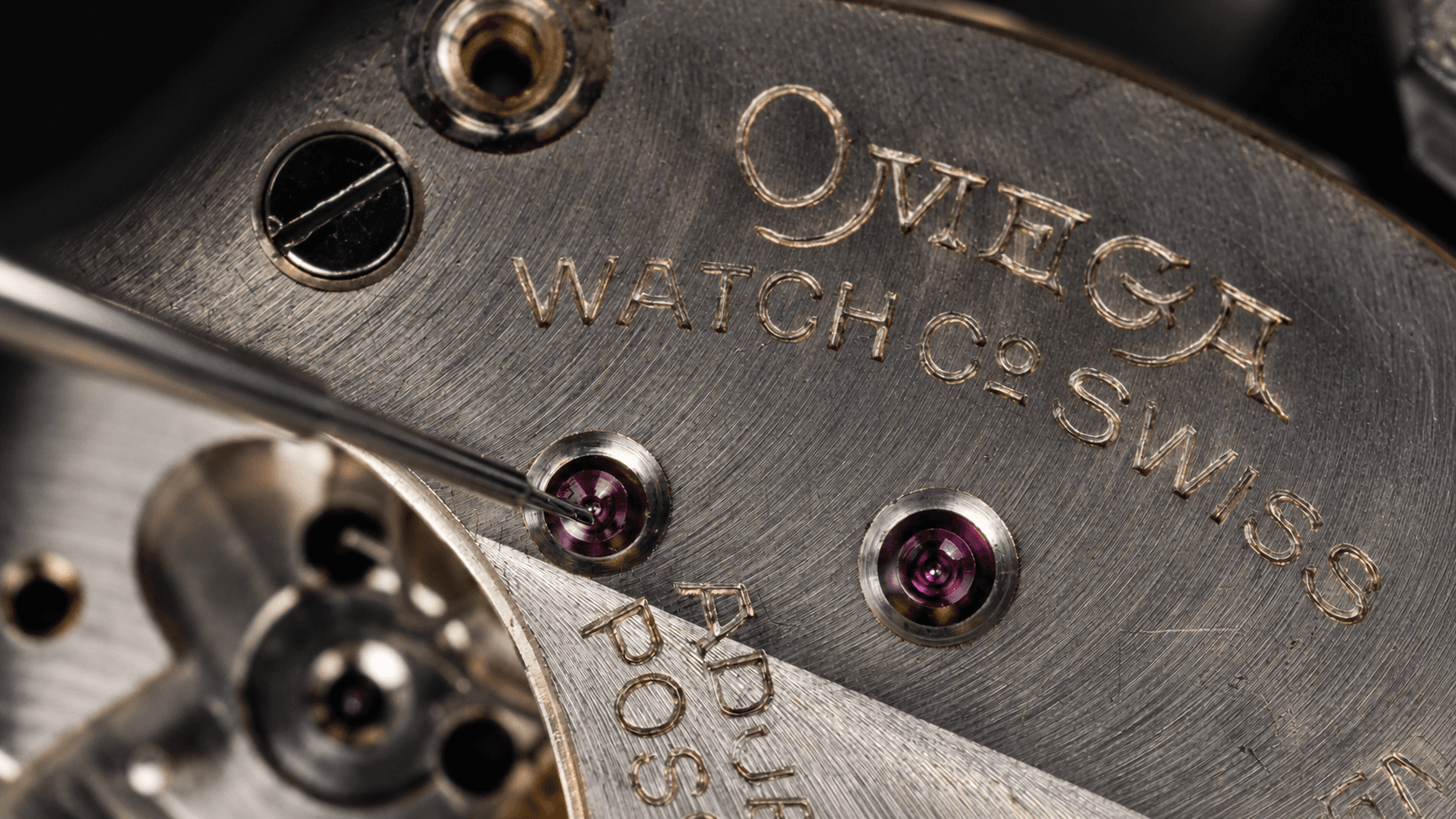
A mechanical watch is an extraordinary piece of engineering. Hidden beneath its dial is a complex system of gears, springs, levers, and precision components working together to measure time without a battery or electronic circuit.
Some mechanical watches continue operating for generations. However, even the finest movements require maintenance to remain reliable.
Over time, lubricants deteriorate, friction increases, and microscopic contamination can accumulate inside the movement. Without proper servicing, these conditions may eventually lead to poor timekeeping, reduced power reserve, or complete mechanical failure.
But what actually happens when a mechanical watch is serviced?
In this guide, we take a detailed look inside the watchmaker's workshop and explain the complete servicing process, from the initial inspection to the final timekeeping tests.
What Is a Mechanical Watch Service?
A mechanical watch service is a comprehensive maintenance procedure designed to restore the movement's proper operation, reduce unnecessary wear, and maintain reliable timekeeping.
Unlike a simple external cleaning, a complete movement service involves carefully dismantling the mechanism, inspecting individual components, removing old lubricants, and reassembling the movement with fresh oils and greases.
Depending on the watch's condition, the service may also include repairing or replacing worn components.
A typical complete mechanical watch service involves:
- Initial inspection and diagnosis.
- Removing the movement from the watch case.
- Complete movement disassembly.
- Cleaning the movement components.
- Inspecting parts for wear and damage.
- Reassembly and precise lubrication.
- Escapement and balance inspection.
- Timekeeping adjustment and regulation.
- Final testing and quality control.
Although the basic principles are similar across many mechanical watches, the exact procedures vary depending on the movement's design, age, and condition.
Step 1: Initial Inspection and Diagnosis
Before a watchmaker begins disassembling a mechanical watch, the first step is to evaluate its condition.
This initial inspection helps identify potential problems and determine the work required.
The watchmaker typically examines the exterior of the watch, including the case, crystal, crown, and winding mechanism.
The movement's behavior is also evaluated.
Important observations may include:
- Whether the watch starts when wound.
- How smoothly the winding mechanism operates.
- Whether the hands can be adjusted correctly.
- Whether the watch runs continuously or stops intermittently.
- Whether unusual sounds or resistance are present.
Using a Timegrapher
If the movement is running, a watchmaker may use a timegrapher to evaluate its performance.
A timegrapher measures several important characteristics of a mechanical watch.
These typically include:
- Rate: How many seconds the watch gains or loses per day under the measured conditions.
- Amplitude: The angular distance through which the balance wheel oscillates.
- Beat error: The difference in timing between the two alternating beats of the escapement.
These measurements provide valuable information about the movement's condition.
For example, unusually low balance amplitude may indicate excessive friction, insufficient mainspring torque, or problems within the escapement.
However, timegrapher readings alone cannot identify every mechanical fault. They must be interpreted alongside a physical inspection of the movement.
Step 2: Removing the Movement From the Case
Once the initial inspection is complete, the watchmaker carefully opens the watch case.
The method depends on the case construction.
Some watches have screw-down casebacks, while others use snap-on backs or more specialized designs.
After opening the case, the watchmaker removes the winding stem and releases the movement from its retaining system.
The movement can then be carefully extracted from the case.
At this stage, the dial and hands are usually removed to allow access to the components located beneath them.
Specialized hand-removing tools and protective materials help reduce the risk of damaging the dial or hands.
This is particularly important when servicing vintage watches, where original dials and hands may be fragile, difficult to replace, or historically valuable.
Step 3: Complete Movement Disassembly
One of the most important stages of a mechanical watch service is the complete disassembly of the movement.
A mechanical watch contains numerous small components, many of which are manufactured to extremely precise tolerances.
Each component must be removed carefully and organized to ensure correct reassembly.
The exact sequence depends on the movement, but the process commonly involves dismantling several major systems.
The Automatic Winding System
In automatic watches, the rotor and automatic winding components are generally removed to access the underlying movement.
These parts convert the motion of the wearer's wrist into energy that winds the mainspring.
The watchmaker inspects the automatic winding mechanism for wear, damaged components, and excessive friction.
The Balance Assembly
The balance wheel and hairspring form the regulating oscillator of the mechanical watch.
Because these components are extremely delicate, they require careful handling during disassembly.
The balance assembly is typically removed as a unit and stored safely until inspection and reassembly.
The Escapement
The escapement controls the release of energy from the gear train and provides impulses that maintain the balance wheel's oscillation.
In a traditional Swiss lever escapement, the pallet fork and escape wheel are essential components.
The watchmaker removes these parts and later inspects their condition, including the pallet stones, pivots, and interacting surfaces.
The Gear Train
The gear train transfers energy from the mainspring barrel toward the escapement.
Its wheels rotate on small pivots supported by bearings, many of which contain synthetic jewels.
During disassembly, the train bridge is removed and the individual wheels are carefully extracted.
The Mainspring Barrel
The mainspring barrel contains the spring responsible for storing the watch's mechanical energy.
Before dismantling the movement, stored mainspring tension must be safely released using the appropriate procedure.
The barrel can then be removed and opened for inspection and servicing.
The Keyless Works
The keyless works control the winding and hand-setting functions of the watch.
These components typically include small levers, springs, gears, and sliding mechanisms.
They are inspected for damage, wear, and proper mechanical interaction.
Once disassembly is complete, the watchmaker can examine the movement's individual components more thoroughly.
Step 4: Cleaning the Movement Components
After disassembly, the next major stage is cleaning.
Over years of operation, old lubricants can deteriorate and become contaminated with microscopic particles.
These deposits increase friction and may interfere with the movement's operation.
Cleaning removes old oils, grease, dirt, and other contaminants from suitable components.
Watch Cleaning Machines
Professional watchmakers often use specialized cleaning machines designed for mechanical watch components.
Depending on the equipment and cleaning process, these machines may use rotating baskets, dedicated cleaning solutions, rinsing stages, and controlled drying.
Some watchmaking workshops also use ultrasonic cleaning equipment for appropriate components.
Ultrasonic cleaners generate high-frequency vibrations within a cleaning liquid, helping remove contamination from difficult-to-reach surfaces.
However, not every watch component is suitable for ultrasonic cleaning.
Delicate assemblies, certain materials, and components with sensitive finishes may require alternative cleaning methods.
Cleaning the Balance and Hairspring
The balance assembly requires particular attention.
The hairspring is extremely delicate, and even small distortions can affect the watch's performance.
Appropriate cleaning methods must be selected to avoid damaging the hairspring or other sensitive components.
Once cleaning is complete, the parts are dried and prepared for inspection and reassembly.
Step 5: Inspecting Components for Wear and Damage
Cleaning alone does not guarantee that a mechanical watch will operate correctly.
Before reassembly, the watchmaker must inspect the components for wear, damage, and other mechanical problems.
Even small defects can have a significant effect on the performance of a precision movement.
Checking Wheel Pivots
The pivots of the gear train wheels are examined for scoring, bending, corrosion, and excessive wear.
Damaged pivots can create additional friction and reduce the efficiency of the movement.
Inspecting Jewel Bearings
Jewel bearings provide hard, low-friction surfaces for rotating components.
The watchmaker checks these jewels for cracks, contamination, and damage.
Where applicable, the correct positioning and condition of cap jewels and shock-protection components are also verified.
Inspecting the Mainspring
The mainspring is examined for damage, deterioration, and suitability for continued use.
In some cases, replacing an old mainspring is preferable to reusing it.
The barrel walls, arbor, and related components are also inspected.
Checking the Escapement
The escapement components are examined for damaged teeth, worn pivots, displaced pallet stones, and other defects.
Correct escapement geometry is essential for efficient energy transfer and reliable operation.
Any damaged components must be repaired or replaced before final reassembly.
Step 6: Reassembling the Movement
After cleaning and inspection, the movement is ready for reassembly.
This stage requires patience, precision, and a detailed understanding of the movement's construction.
Each component must be returned to its correct position without introducing contamination or causing mechanical damage.
Depending on the movement, reassembly generally begins with the mainspring barrel, gear train, and associated bridges.
The watchmaker carefully positions the wheels so that their pivots enter the corresponding jewel bearings.
Once the bridges are secured, the gear train can be checked for freedom of movement.
Checking the Gear Train
A properly assembled gear train should rotate freely with minimal unnecessary resistance.
Watchmakers may perform controlled freedom-of-movement checks to verify that the wheels are correctly positioned.
Excessive friction, incorrect pivot engagement, or damaged components must be corrected before continuing.
This stage is important because even a small amount of additional resistance can significantly reduce the energy available to the balance wheel.
Step 7: Lubricating the Movement
Correct lubrication is one of the most important aspects of a professional mechanical watch service.
Mechanical movements contain numerous friction points, but these locations do not all require the same lubricant.
Different oils and greases are selected according to the mechanical requirements of individual components.
Watchmakers use specialized oilers to apply extremely small quantities of lubricant to precisely defined locations.
Why Different Watch Oils Are Used
Watch lubricants vary in viscosity, stability, and intended application.
For example, certain low-viscosity oils are suitable for high-speed, low-load bearings, while heavier lubricants may be required for slower-moving or more heavily loaded components.
Escapement lubrication requires particularly careful control because excessive or incorrectly positioned oil can interfere with its operation.
Commonly used watchmaking lubricants include products from Moebius, although the correct choice depends on the movement and manufacturer's specifications.
Why Too Much Oil Is a Problem
Applying excessive lubricant can be just as problematic as insufficient lubrication.
Excess oil may migrate away from its intended location, attract contamination, or reach components that should remain dry.
For this reason, professional lubrication is not simply about adding oil.
It involves selecting the correct lubricant, applying the appropriate quantity, and placing it precisely where it is needed.
Step 8: Installing the Escapement and Balance
Once the main movement components are assembled and lubricated, the escapement and balance assembly can be installed.
The pallet fork must interact correctly with the escape wheel, while the balance roller must engage properly with the pallet fork.
When the mechanism is functioning correctly, energy from the mainspring is transferred through the gear train and escapement to maintain the oscillation of the balance wheel.
This is often one of the most satisfying moments during a mechanical watch service.
After careful assembly, the balance wheel begins oscillating and the movement comes back to life.
However, a ticking movement is not necessarily a fully serviced or correctly adjusted movement.
Further testing and regulation are still required.
Step 9: Regulating the Watch
Once the movement is running, the watchmaker evaluates its timekeeping performance.
This commonly involves using a timegrapher to measure the rate, amplitude, and beat error.
Mechanical watches are affected by several factors, including position, mainspring torque, temperature, and the condition of the regulating system.
For this reason, a movement may behave differently when placed horizontally or vertically.
Adjusting the Rate
On many traditional mechanical watches, the daily rate can be adjusted using a regulator mechanism that changes the effective working length of the hairspring.
Other movements use different regulating systems, including free-sprung balances.
The correct adjustment method depends on the movement's design.
Checking Beat Error
Beat error describes the difference in timing between the two alternating beats of the escapement.
Excessive beat error may indicate that the balance and escapement are not correctly centered in their interaction.
Where appropriate, the watchmaker can adjust the relevant components to improve beat symmetry.
Testing Multiple Positions
Professional regulation often involves measuring the movement in several positions.
These may include dial-up, dial-down, and different vertical orientations.
Comparing the results helps the watchmaker evaluate positional differences and identify potential mechanical problems.
It is important to remember that vintage mechanical watches were manufactured to different standards and tolerances.
Not every vintage movement can reasonably be expected to achieve the performance of a modern high-precision mechanical watch.
Step 10: Reinstalling the Dial, Hands, and Movement
After the movement has been assembled and its operation checked, the dial and hands can be reinstalled.
The watchmaker carefully positions the hands to ensure that they are correctly aligned and have sufficient clearance.
Improper hand installation can cause the hands to touch each other, the dial, or the crystal.
Such interference may affect timekeeping or stop the movement completely.
Once the dial and hands are installed, the movement is returned to the watch case.
The winding stem, crown, and movement-retaining components are then secured.
The caseback is closed using the appropriate method for the case design.
What About Water Resistance?
Depending on the watch, servicing may also involve inspecting or replacing suitable case seals.
However, vintage watches require special consideration.
Even if a watch was originally marketed as water-resistant, its current condition may not allow it to meet the original specification.
Water-resistance testing should only be performed using methods appropriate for the particular watch and its condition.
A vintage watch should never be assumed to be waterproof simply because it has been serviced.
Step 11: Final Testing and Quality Control
The final stage of a mechanical watch service involves verifying that the completed watch operates correctly.
Depending on the movement and the workshop's procedures, testing may include:
- Checking the winding and setting functions.
- Monitoring timekeeping performance.
- Measuring balance amplitude.
- Checking the power reserve.
- Observing operation in different positions.
- Verifying that the hands move without interference.
- Checking automatic winding performance where applicable.
- Inspecting the completed watch for cleanliness and correct assembly.
Some watches require additional adjustment after their initial running tests.
This is a normal part of the servicing process, particularly when working with older mechanical movements.
The goal is not simply to make the watch tick again, but to ensure that it operates as reliably as its mechanical condition allows.
How Long Does a Mechanical Watch Service Take?
The time required to service a mechanical watch depends on several factors.
A relatively simple hand-wound movement in good condition may require less work than a complicated automatic chronograph.
Vintage watches can also present additional challenges, especially when components are damaged or replacement parts are difficult to source.
The actual hands-on servicing process may take several hours or longer, depending on the complexity of the movement.
However, the total turnaround time is often significantly longer because of diagnosis, parts sourcing, repairs, testing, and the workshop's existing workload.
For this reason, a professional service may take days or weeks from the time the watch is received until it is ready for collection.
How Often Should a Mechanical Watch Be Serviced?
There is no single maintenance interval that applies to every mechanical watch.
The appropriate servicing schedule depends on the movement, manufacturer recommendations, age, condition, and frequency of use.
Many manufacturers recommend periodic servicing at intervals of several years.
However, vintage watches may require a more individualized approach.
A watch with an unknown service history should be inspected before being placed into regular use, particularly if it has remained unused for decades.
Signs that a movement may require attention include:
- Significant changes in timekeeping accuracy.
- Reduced power reserve.
- Unusual winding resistance.
- Intermittent stopping.
- Unusual mechanical noises.
- Noticeably reduced balance amplitude.
Addressing problems early can help prevent additional wear and more expensive repairs.
Is Servicing a Vintage Watch Different From Servicing a Modern Watch?
The fundamental principles of mechanical watch servicing remain similar, but vintage movements often require additional care.
Older watches may contain components that are no longer manufactured, making replacement parts difficult to obtain.
Some movements also use older construction methods, unusual mechanisms, or materials that require specialized knowledge.
Preserving originality is another important consideration.
For collectors, original dials, hands, cases, and movement components may contribute significantly to a watch's historical and monetary value.
Unnecessary polishing, refinishing, or replacement of original cosmetic components can reduce that value.
For this reason, vintage watch restoration should balance mechanical reliability with the preservation of historical authenticity.
Frequently Asked Questions
Does a mechanical watch service include polishing?
Not necessarily. Movement servicing and cosmetic restoration are separate procedures. Case polishing may be offered as an additional service, but it should not be assumed to be included. For collectible vintage watches, preserving the original case finish is often preferable.
Will servicing make my vintage watch accurate?
A proper service can improve timekeeping by reducing friction, correcting mechanical problems, and allowing accurate regulation. However, the final performance depends on the movement's design, age, condition, and mechanical tolerances.
Can a mechanical watch be serviced without replacing parts?
Yes. If the components remain in good condition, cleaning, lubrication, and adjustment may be sufficient. Worn or damaged parts must be addressed when necessary.
Can servicing fix a watch that has completely stopped?
In many cases, yes. However, the cause of the failure must first be identified. Some watches require only maintenance, while others need replacement components or more extensive repairs.
Should I service a vintage watch that still works?
A running watch can still contain deteriorated lubricants or worn components. If its maintenance history is unknown, professional inspection can help determine whether servicing is necessary.
Final Thoughts
A complete mechanical watch service is a detailed process that requires patience, precision, and specialized knowledge.
From carefully dismantling the movement to cleaning microscopic components, applying precise quantities of lubricant, and regulating the balance wheel, every stage plays an important role in maintaining the watch's performance.
For vintage watches, servicing is about more than simply keeping time.
It is also about preserving the craftsmanship, engineering, and history contained within a mechanical movement.
At Timeless Tickers, we believe that understanding the mechanics behind traditional watchmaking makes every vintage timepiece even more fascinating.
With careful maintenance and skilled restoration, a mechanical watch that has already survived for generations may continue ticking for many years to come.